


For many families, a trip to the doctor's office is a routine part of life. But if you have a child on the autism spectrum, you might know that these visits can sometimes be challenging, even overwhelming. From the unfamiliar environment to the necessary physical touch, doctor's appointments can trigger anxiety and lead to difficult moments. At Tellos, we understand these challenges, and we want to share how a compassionate approach to learning and support can make these experiences much smoother for your child and your whole family.
What specific sensory issues make doctor visits difficult for children with autism?
The root of anxiety during medical visits often lies in overwhelming or unpredictable sensory input. The intensity of the environment can quickly lead to distress or meltdown.
Tactile (Touch) Sensitivity
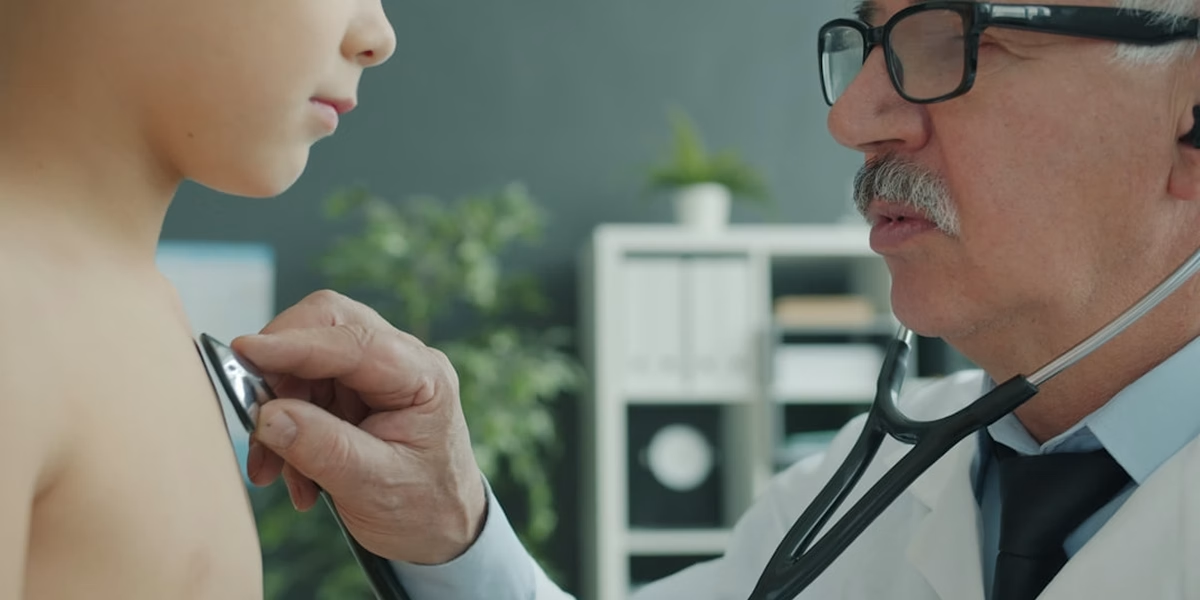
Being touched by a stranger (the doctor or nurse) during an examination can be incredibly uncomfortable or even distressing. The pressure of the stethoscope or the cold feel of the thermometer can trigger an aversive reaction.
Auditory (Sound) Overload
The waiting room noise (chattering, crying children), the beeps of equipment, and the unexpected sound of a door slamming can be amplified and overwhelming.
Visual and Olfactory (Sight and Smell) Input
Bright, fluorescent lighting, cluttered walls, and the distinctive clinical smells (disinfectants, antiseptic) can be unsettling in the unfamiliar environment.
Proprioceptive/Vestibular (Movement)
Being asked to sit still on a crinkly paper on a high examination table can feel unstable or disorienting.
How do I prepare an autistic child for a doctor's visit?
Preparation is the single most effective tool for reducing anxiety related to doctor visits. It takes away the element of surprise and increases predictability, giving your child a sense of control.
Social Stories
Create simple, personalised stories with pictures that show the steps of the entire visit, from leaving home to getting a reward afterwards.
Role-Playing
Practise the experience through play at home. Take turns being the doctor and the patient, using pretend tools to check ears and listen to the heart. This desensitises your child to the actions.
Visual Schedules
Use a visual schedule to show the exact order of events during the appointment (e.g., Wait → Nurse → Doctor → Reward). The child can track their progress, reducing uncertainty.
Video Modelling
Watch short, positive videos of children successfully going through a doctor's visit. Seeing a calm visual example can be very reassuring and instructive.
How can a social story help with medical appointments?
A social story is a narrative tool used to describe a social situation, skill, or concept in a highly structured format. For medical appointments, it works to address anxiety by clarifying expectations and what will happen.
Predictability
It breaks down the appointment into small, manageable steps, explaining exactly what the child will see, who they will talk to, and what the doctor will do.
Validation
It validates the child's feelings, stating it is okay to feel nervous or uncomfortable.
Coping Mechanisms
It provides a script for appropriate behaviours and coping skills to use (such as "I will take a deep breath when the doctor touches my arm").
Positive Outcome
The story always ends with a positive outcome (e.g., "The doctor visit is over, and we go get a sticker"), linking the experience to a reward.
Should an autistic child bring a comfort item to the doctor?
Yes, bringing a comfort item is almost always recommended and can be extremely helpful for managing anxiety in an unfamiliar and overwhelming setting.
Familiarity in Unfamiliarity
A favourite stuffed animal, blanket, or small toy provides a tangible link to the safety of home. This familiar object acts as an anchor in the new environment.
Distraction and Focus
The item can be used as a distraction during brief procedures. Focusing on the familiar texture or object can override some of the distressing sensory input.
Emotional Regulation
Holding the item can be part of their self-soothing routine, providing deep pressure or a calming texture.
How does the doctor's office use visual schedules for autistic patients?
Ideally, a collaborative medical team should use visual supports to make the appointment less scary and more predictable, often simplifying the communication process.
Breaking Down the Visit
The office can display a visual schedule showing the patient what will happen first, second, and last (e.g., "Weigh In → Temperature Check → Doctor Talk → Sticker").
Consent for Touch
Some practices use visual cues to ask for permission before touching the child, such as a "ready" or "stop" card, giving the child control over their body.
Wait-Time Communication
Using timers or visual cues to indicate how long the wait will be reduces anxiety related to uncertainty. The medical assistant might say, "We will be back when the sand runs out."
Can ABA therapy help with tolerating medical procedures like blood draws or vaccines?
Absolutely. ABA principles are highly effective for systematically reducing the anxiety and resistance associated with high-anxiety medical procedures.
Systematic Desensitisation
Before the appointment, a therapist can help your child gradually tolerate the sensations associated with the procedure through play. For example, practising applying pressure with a cotton ball on the arm or using a vibrating toy to simulate the injection sensation.
Deep Breathing and Relaxation Training
ABA teaches specific, functional coping skills, such as deep breathing or counting, that the child can use to manage their anxiety in the moment.
Contingency Management
This involves setting up a powerful positive reinforcement system. The child receives a pre-determined, highly desired reward immediately upon showing tolerance or compliance (e.g., holding still for the injection).

Tellos: Partnering with You on Your Child's Health Journey
Investing time and effort in learning how to navigate doctor's visits isn't just about making the next appointment easier. It's about promoting your child's health and building independence. When your child can better cope with medical settings, they gain a sense of mastery and independence in managing their own healthcare.
At Tellos, our compassionate in-home ABA therapy can equip you with the knowledge and tools to understand your child's unique needs and develop effective strategies for various situations, including doctor's visits. We believe in empowering families to support their children in a way that fosters growth, independence, and a greater sense of well-being.
If you're looking for a supportive partner to help you navigate these everyday challenges, we're here to connect with you and explore how we can help your child thrive.
People Also Ask Questions
- How do I prepare an autistic child for a doctor's visit?
- What specific sensory issues make doctor visits difficult for children with autism?
- How can a social story help with medical appointments?
- Should an autistic child bring a comfort item to the doctor?
- How does the doctor's office use visual schedules for autistic patients?
- Can ABA therapy help with tolerating medical procedures like blood draws or vaccines?