



As parents of children on the autism spectrum, you are your child's biggest advocate, especially when it comes to their education. You might have heard the term "IEP" thrown around, and perhaps it feels a little overwhelming or unclear. At Tellos, we believe in empowering families with knowledge, and understanding what an IEP is and how it works is a crucial step in supporting your child's educational journey and overall success.
IEP stands for Individualized Education Program. Think of it as Your Child's Personalized Roadmap for Learning. It's a legally binding document created by a team that includes you (the parents), educators, therapists, and sometimes your child, if appropriate. It is a written plan that outlines your child's unique learning needs, the specific supports and services the school will provide, and how their progress will be measured.
Who qualifies for an Individualized Education Program (IEP)?
The IEP is a legal document created under special education law (e.g., the Individuals with Disabilities Education Act, or IDEA, in the US). A child must meet two key criteria to qualify for an IEP:
- Diagnosis: The child must have one of the 13 recognized disabilities, which include Autism Spectrum Disorder (ASD).
- Impact on Education: Crucially, the disability must adversely affect your child's educational performance and necessitate specialised instruction. A diagnosis alone is not enough; the child must need unique support that cannot be adequately provided within the general education curriculum.
If your child meets these criteria, they are legally entitled to a Free and Appropriate Public Education (FAPE) tailored to their needs. FAPE is a law that ensures students with disabilities have the same right to K-12 public education that students without disabilities have. Understanding that your child's IEP is a legal document helps you know your rights and how to advocate for your child if you have concerns.

What is the difference between accommodations and modifications in an IEP?
Knowing the difference is fundamental to understanding your child's curriculum and expectations. Both are critical tools, but they achieve very different outcomes.
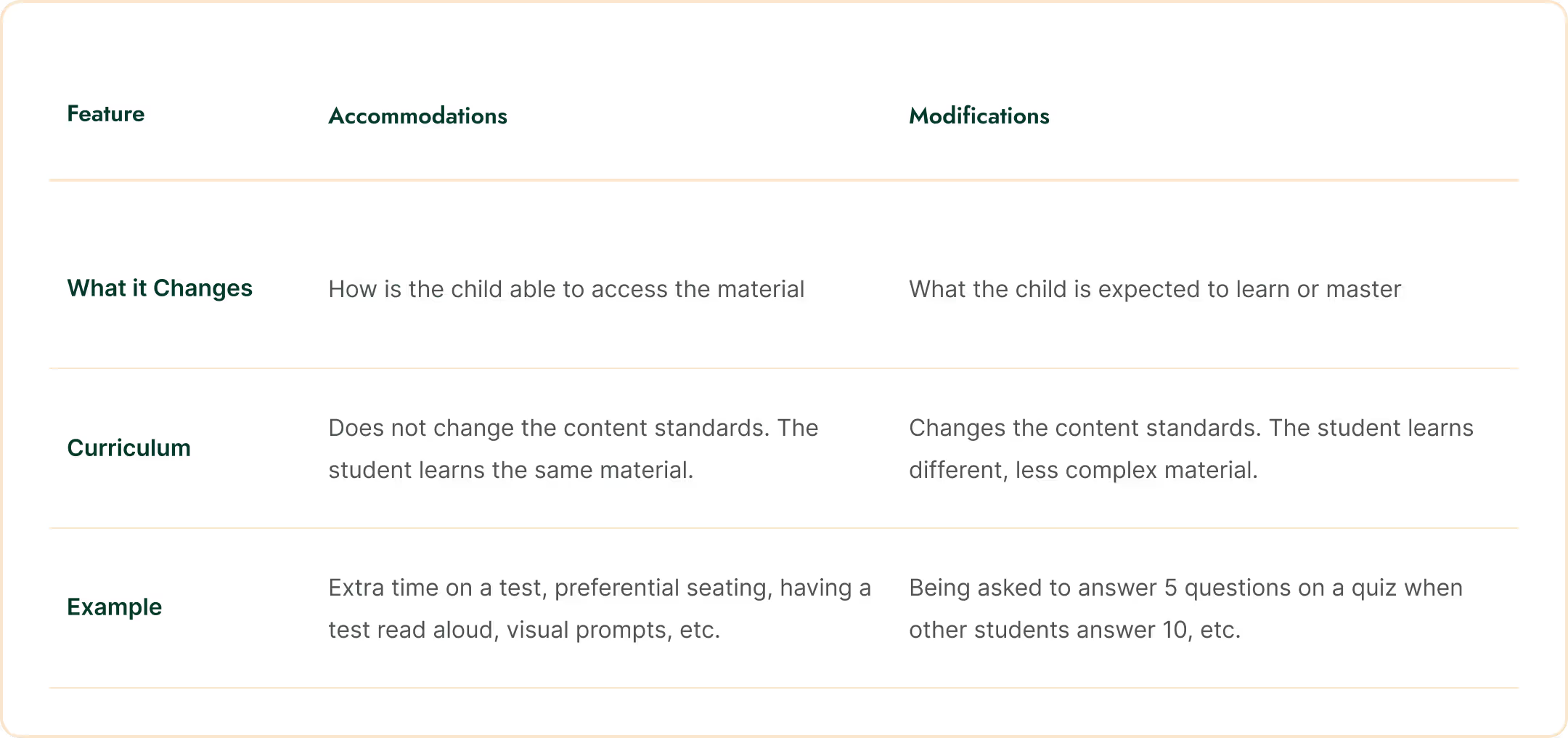
Accommodations simply remove barriers to accessing the curriculum and do not lower the bar for achievement.
Modifications change the bar itself and reduce the learning expectations. It's vital for parents to understand what is being implemented and why.
What should parents prepare before an IEP meeting?
Preparation is the single most important action you can take to be an effective advocate in an IEP meeting. You are the expert on your child, and your insights are invaluable to the team.
- Create a Parent Input Statement: Write a clear document detailing your concerns, your child's strengths (always start with strengths!), and your goals for the coming year. This ensures your perspective is officially documented.
- Track Data: Keep a log of what strategies work well at home, any recent behavioral challenges, and any specific progress you've seen since the last IEP meeting. Concrete examples are powerful.
- Review the Draft: Ask for a draft of the IEP beforehand, and read it carefully. Highlight sections you don't understand or those you want to discuss before the meeting. Come with questions!
- Determine Your Goals: Identify two or three non-negotiable goals or services you want for your child. Know what you are willing to compromise on and where you need to hold firm.
How often is an IEP reviewed or updated?
The IEP process is cyclical and is governed by strict legal timelines to ensure your child's needs are continuously addressed.
- Annual Review: The full IEP team must meet at least once every 12 months to review the document. At this meeting, they will check progress on current goals and set new ones for the coming year.
- Triennial Evaluation: Every three years, a comprehensive re-evaluation is conducted. This determines if your child continues to meet the eligibility criteria for special education services and reviews the appropriateness of their current classification.
- Amendments: The IEP can be reviewed and amended at any time if the school or parent believes the child's needs or placement are no longer appropriate. This can happen by calling an unscheduled team meeting. If you feel as though your child is struggling or needs different supports, don't hesitate to reach out to the school to call a meeting.
Can a child receive ABA services through their school's IEP?
Yes, in many regions, the school system is legally obligated to provide services that are deemed medically necessary and educationally relevant for your child to make progress with their goals.
- Related Service: ABA is typically provided in a school setting as a Related Service or is integrated into the instruction through a Behavioral Intervention Plan (BIP) developed by a Board Certified Behavior Analyst (BCBA).
- Demonstrating Need: For the school to provide it, the IEP team must agree that ABA principles or support are necessary for the child to address a significant deficit in behavior or social skills that impedes their learning.
- Tellos's Role: Our compassionate in-home ABA therapy often complements the supports your child receives through their IEP. We can work with you to understand your child's IEP goals and develop strategies at home that reinforce their learning in areas like communication, social skills, and daily living, creating a powerful home-school partnership.

What should I do if I disagree with the school's IEP proposal?
The law explicitly grants parents right to advocate for their child's education. Disagreement is not a failure; it is part of the negotiation process.
- Do Not Sign Immediately: You do not have to sign the IEP at the meeting. Politely inform the team that you need time to review the final document, then take it home.
- Document Concerns: Write a letter to the school detailing the specific parts of the IEP you disagree with (e.g., goals are not measurable, services are insufficient, placement is too restrictive).
- Partial Agreement: You can choose to agree with the parts you support (e.g., speech therapy) while disagreeing with other parts (e.g., the amount of time in the general education classroom). The agreed-upon services must begin.
- Seek Mediation: If you cannot reach an agreement, you have the right to request state-sponsored mediation or file for a due process hearing. Consulting an education advocate or special education lawyer is often advisable at this stage.
Tellos: Partnering with You on Your Child's Educational Journey
Understanding your child's IEP might seem like a big task at first, but remember that you are not alone. By taking the time to learn about the IEP process, you are empowering yourself to be an even stronger advocate and ensuring they receive the individualized education they deserve to reach their full potential.
If you have questions about how ABA therapy can work in conjunction with your child's school and IEP team, we encourage you to reach out to us at Tellos. We're here to support you every step of the way.